Something changed across the entire Swiss map in 2025.
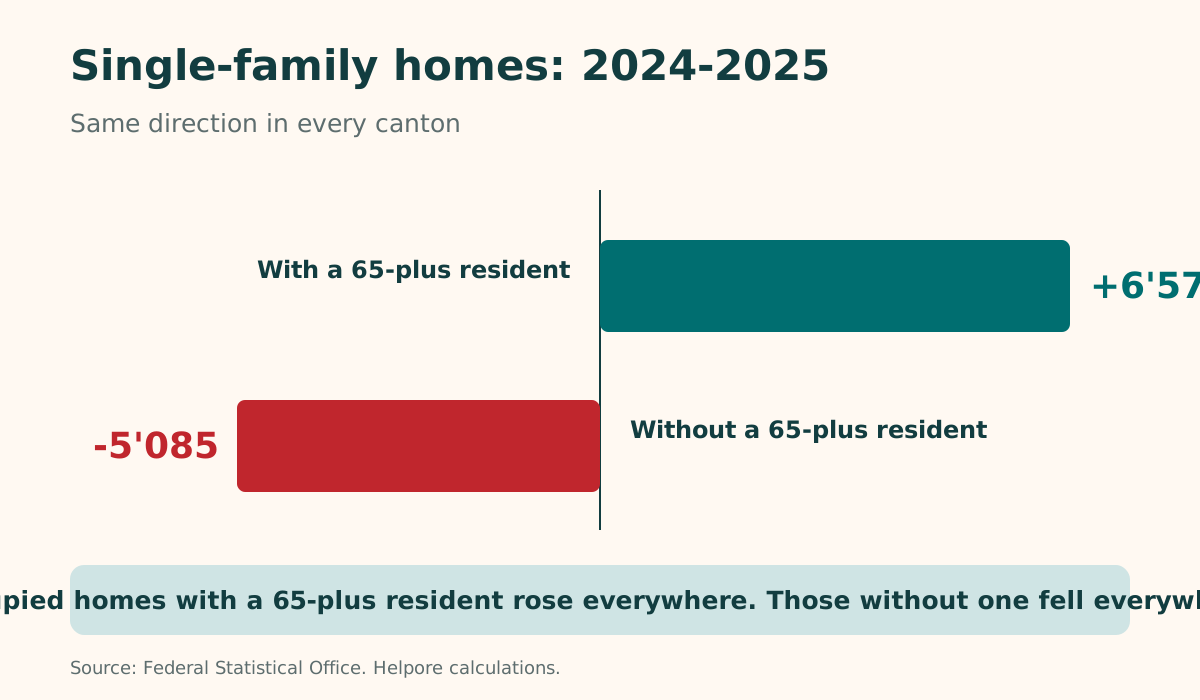
In all 26 cantons, the number of occupied single-family homes with at least one resident aged 65 or over increased. In every canton, the number with no resident aged 65 or over decreased. It is the first time this two-way pattern appears in all 26 cantons in the annual comparisons from 2014 to 2025.
Nationally, occupied single-family homes with a resident aged 65 or over rose by 6,573, while those without fell by 5,085. By the end of 2025, 337,198 occupied single-family homes, or 38.6% of the national total, had at least one resident aged 65 or over.
A national split that has been building for years
The 2025 result is not a one-year curiosity. From 2013 to 2025, the number of occupied single-family homes with at least one resident aged 65 or over increased by 24.0%. The number with no resident in that age group declined by 5.8%.
In 2025 alone, the first group increased from 330,625 to 337,198. The second fell from 540,387 to 535,302. Since the total number of occupied single-family homes rose by only 1,488, the change mostly reflects a shift in who lives in the existing stock.
This is a demographic shift in the occupied housing stock, not a count of property purchases. A home can move from one category to the other when a resident turns 65 or when somebody joins or leaves the household.
Older-only households represented 53% of net growth
The same ageing pattern is visible across all types of occupied dwelling.
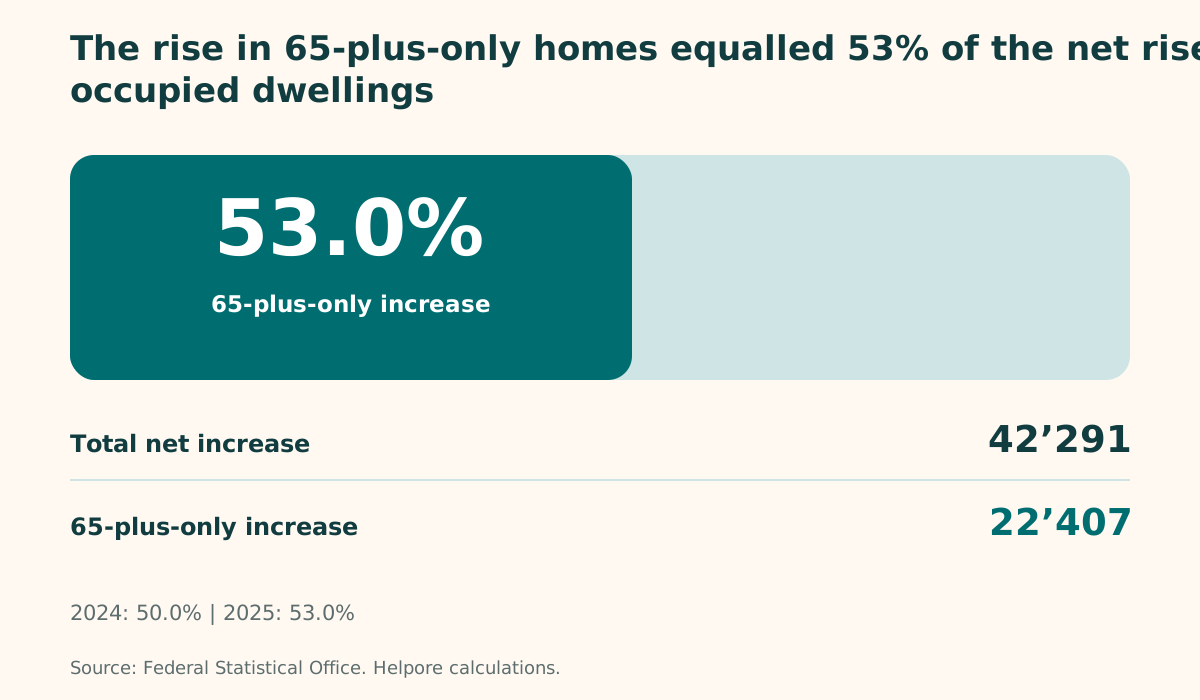
Homes occupied entirely by people aged 65 or over increased by 22,407 in 2025, reaching 959,382. Total occupied dwellings increased by 42,291. The older-only category therefore represented 53.0% of the net increase, the second year in the series in which its contribution exceeded half.
At the end of 2025, older-only households occupied 23.2% of all occupied dwellings in Switzerland. That is almost one home in four.
Where older-only households are most common
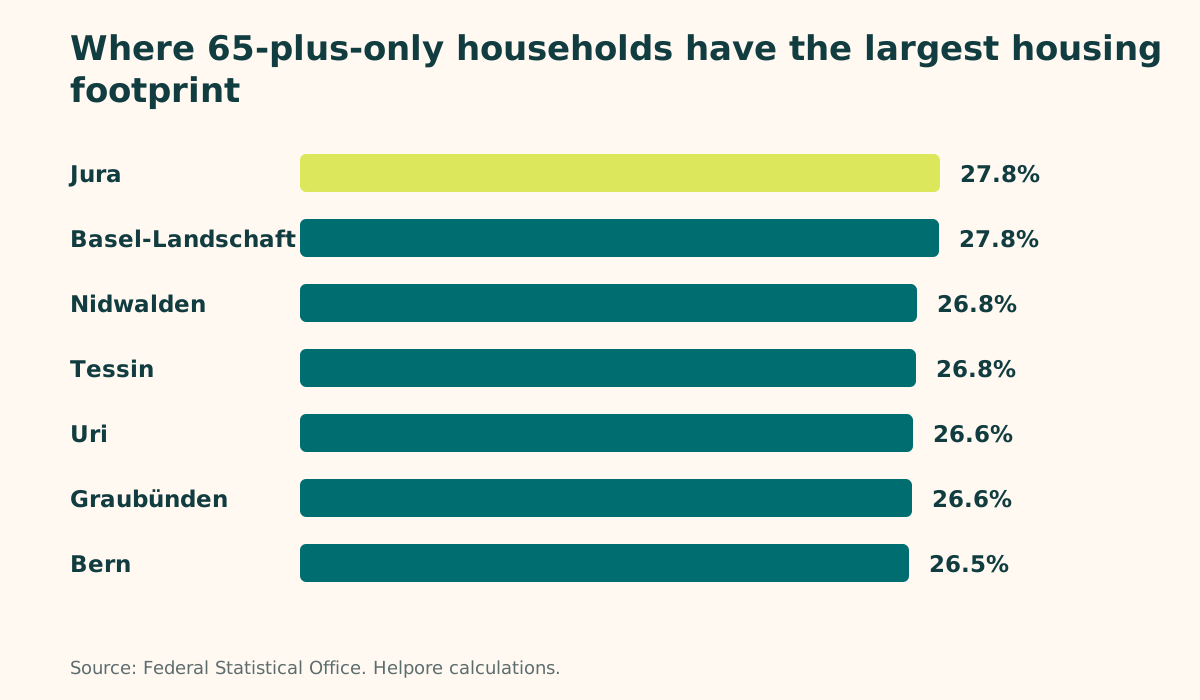
The national average hides meaningful regional differences. Seven cantons recorded an older-only share of at least 26.5% of occupied dwellings in 2025.
| Canton | Occupied dwellings with all household members aged 65 or over |
|---|---|
| Jura | 27.8% |
| Basel-Landschaft | 27.8% |
| Nidwalden | 26.8% |
| Ticino | 26.8% |
| Uri | 26.6% |
| Graubünden | 26.6% |
| Bern | 26.5% |
Many people over 65 manage their homes independently. The figures reveal where older-only households are most present and how quickly this part of the housing map is growing.
Why this matters for household help
An occupied home still needs to be cleaned, maintained and organised regardless of the residents' age. What changes when every household member is older is that there may be no younger person in the home to share physically demanding tasks, errands or day-to-day support.
For household-help planning, the useful signal is scale and direction. Switzerland now has almost 960,000 homes occupied entirely by people aged 65 or over, and their number grew faster than the occupied housing stock in 2025.
For Helpore, that makes ageing at home a practical household question as well as a demographic one: how can people find reliable help when they want it, while keeping choice and independence?
What the categories mean
An occupied dwelling is a dwelling assigned to a private household in the BFS population and housing data at year end.
A single-family home follows the BFS building category: a residential building containing one dwelling. The category does not by itself reveal the number of rooms, floor area, ownership, sale status or whether residents want to move.
The analysis uses three age groupings:
- With 65+: at least one household member is aged 65 or over.
- Without 65+: no household member is aged 65 or over.
- Older-only: every household member is aged 65 or over.
How we calculated the findings
Helpore analysed the BFS table of occupied dwellings by canton, age classes of household members and building category for 2013 to 2025.
The national 2025 changes are direct differences between the published annual counts:
- Single-family homes with at least one resident aged 65 or over:
337,198 - 330,625 = +6,573 - Single-family homes with no resident aged 65 or over:
535,302 - 540,387 = -5,085 - Older-only share of total occupied-dwelling growth:
22,407 / 42,291 = 53.0%
The all-canton result requires both directions to hold in each canton in the same annual comparison. The condition was met in all 26 cantons in 2025 and in no earlier comparison from 2014 to 2024.
Study files
- Full study (PDF)
- Evidence workbook with formulas (XLSX)
- Publication data (CSV)
- Detailed methodology and source ledger
- Press charts: single-family-home divergence, net household growth and cantonal shares
Official source
Federal Statistical Office, Occupied dwellings by age classes of household members and building category, by canton, 2013 to 2025.
Questions or factual corrections can be sent to hello@helpore.com.
Author
Gilberto de la Fuente
Director at Helpore