Helpore study · Calculated 5 October 2026
2027 minimum wages, calculated before the official announcements
CHF 23.00 in the City of Lucerne, CHF 22.50 in Basel-Stadt (in private households only below five hours a week) and CHF 21.53 in Neuchâtel. Helpore applies the published formulas to official data to forecast the 2027 hourly minimums.
Helpore forecasts as at 5 October 2026. Official 2027 rates are pending.
The City of Lucerne and Basel-Stadt publish their next minimum wages in October. We worked out the amounts first, then checked what they mean for households that employ someone.
The three 2027 forecasts
All three formulas lead to higher minimum wages. But each law covers different jobs.
City only. Covers private households, with exceptions.
General cantonal rate. In private households only below five hours a week.
Covers private households, with exceptions.
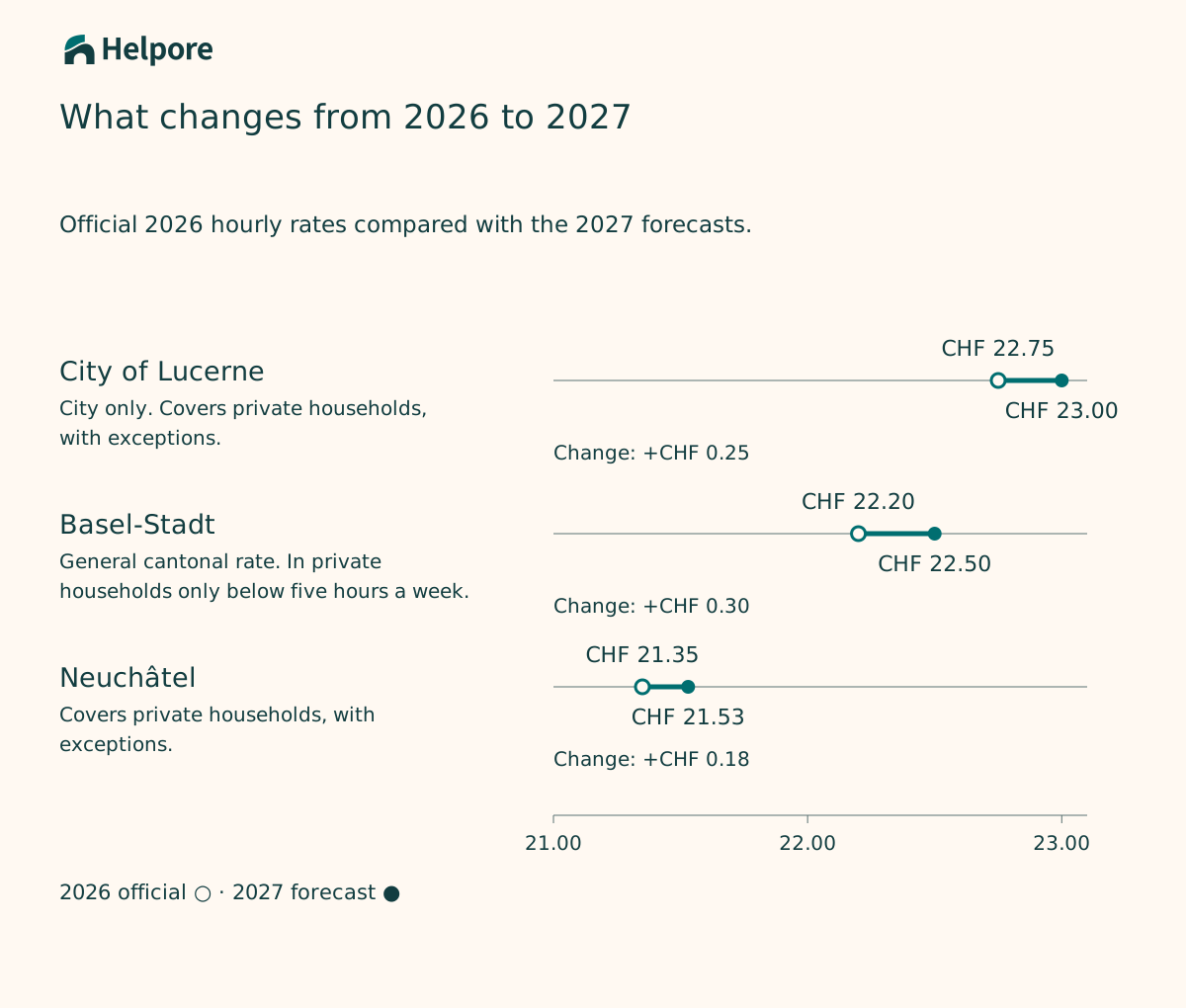
What changes from 2026 to 2027
Official 2026 hourly rates compared with the 2027 forecasts.
Why the calculation is possible before the notices
The City of Lucerne uses the July consumer price index and the latest available nominal wage index. Basel-Stadt uses the August consumer price index and the wage index published for the year before last. Neuchâtel follows the August consumer price index.
These figures are already published. The new rates for the City of Lucerne, Basel-Stadt and Neuchâtel are not. In that short window, the 2027 amounts can be worked out and checked.
The official announcements are still to come, but the figures needed to calculate next year’s minimum wages are already available. We want households and Helpers to know what to expect before January, so they can plan ahead and get the pay right.
Prices and wages move the rates differently
The City of Lucerne and Basel-Stadt combine movements in consumer prices and nominal wages. Against their official 2026 rates, that gives rises of CHF 0.25 and CHF 0.30 an hour. Neuchâtel follows consumer prices alone and arrives at CHF 21.53 (formula 21.5259). Backtests for earlier years can differ from the published amounts by one centime, so the official 2027 rate may differ by one centime too.
In the forecast, the City of Lucerne reaches CHF 23 a few days after its voters chose on 27 September to keep the city minimum wage.
| Place | 2026 official | 2027 forecast | Change | Index rule | Coverage |
|---|---|---|---|---|---|
| City of Lucerne | CHF 22.75 | CHF 23.00 | +CHF 0.25 | July prices plus nominal wages | City only. Covers private households, with exceptions. |
| Basel-Stadt | CHF 22.20 | CHF 22.50 | +CHF 0.30 | August prices plus nominal wages | General cantonal rate. In private households only below five hours a week. |
| Neuchâtel | CHF 21.35 | CHF 21.53 | +CHF 0.18 | August prices | Covers private households, with exceptions. |
Hourly gross wages, before supplements. Download the source table as CSV
The same work can carry a different legal floor
The household is the employer and must pay at least the minimum wage that applies where the work is done.
So a Helper can be owed a different minimum for the same housework on either side of the city limits of Lucerne. In the City of Lucerne, the forecast is CHF 23.00. Kriens lies outside the city, so the federal minimum wage for domestic work applies there: currently CHF 20.35 for the model below.
Hourly household wage floors
A shared CHF 20.00 to CHF 23.25 scale. Basel-Stadt is left out because the federal rate applies there from five hours a week.
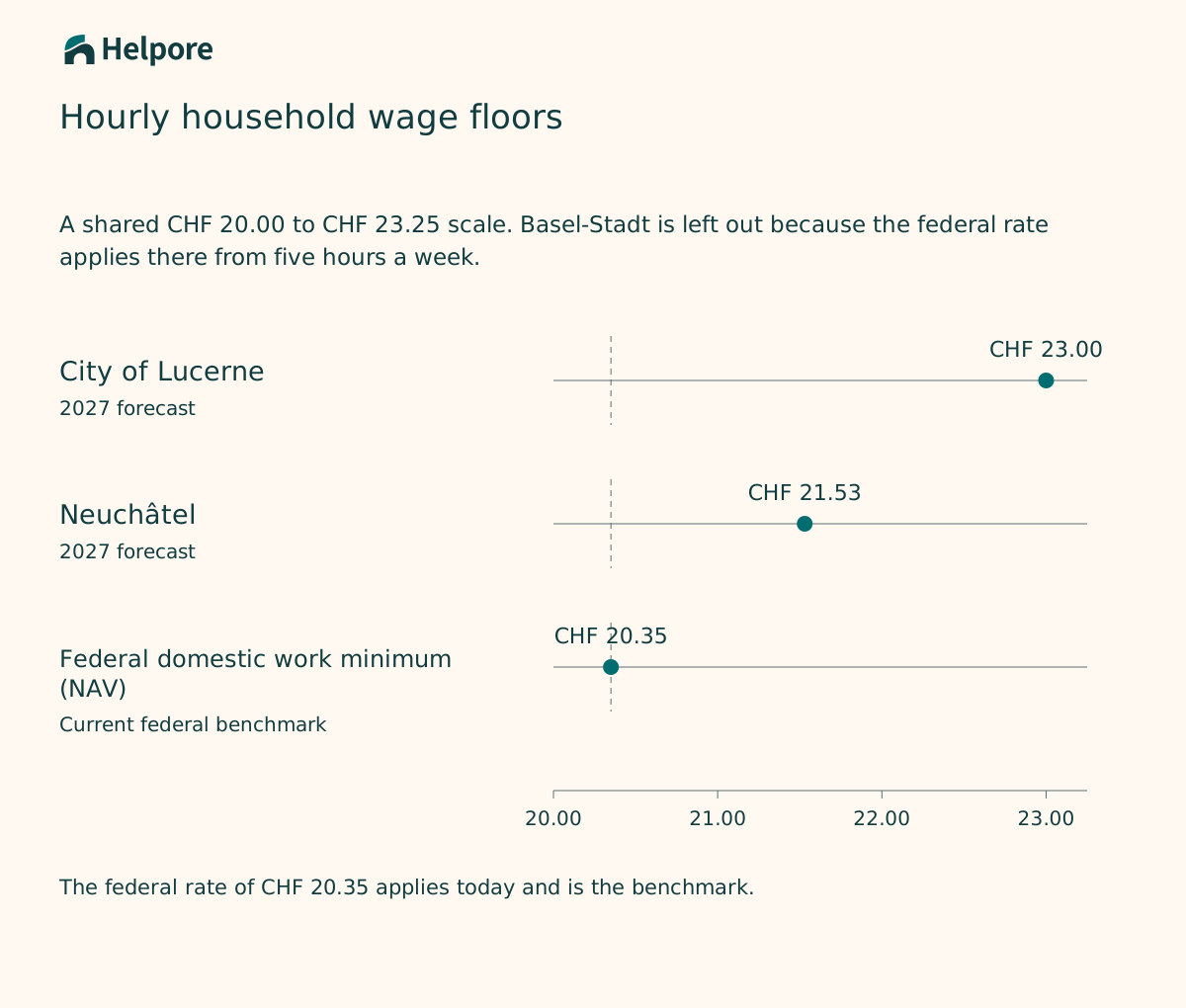
2027 forecast: CHF 23.00
2027 forecast: CHF 21.53
Current federal benchmark: CHF 20.35
Six hours a week: annual wage gap
Extra gross wages a year compared with the CHF 20.35 federal rate, over 312 paid hours.
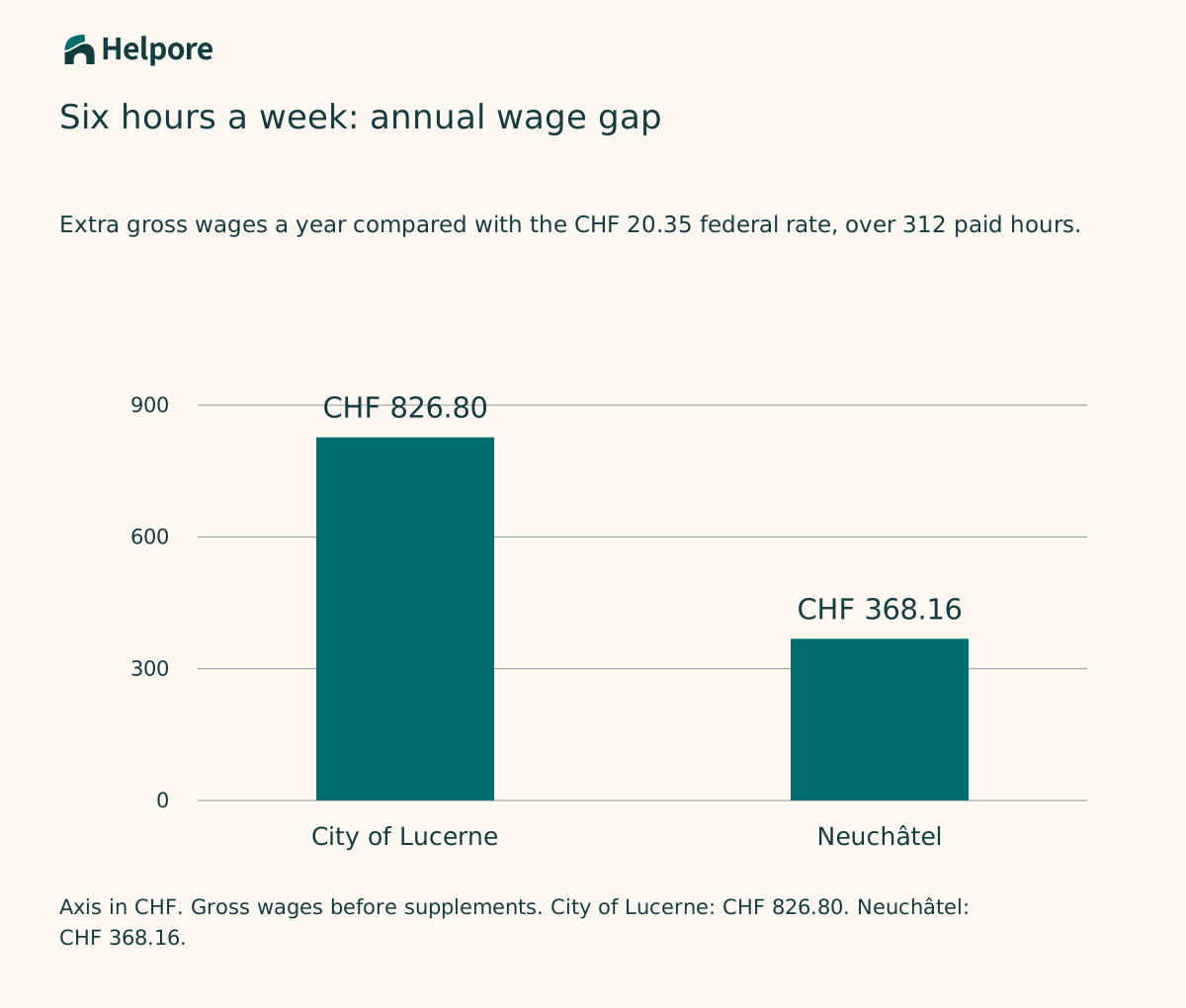
CHF 826.80
CHF 368.16
Model: directly employed unskilled cleaner over 25, less than four years of professional experience in domestic work, no suitable vocational qualification, six paid hours each week for the same household over 52 weeks, and no excluded relationship. No higher binding minimum or more favourable term applies. Holiday and public holiday pay and employer contributions are additional. The household remains the employer. No federal change for 2027 had been announced when checked on 5 October, so the comparison uses the current CHF 20.35 rate.
Calculate the extra annual wage for your household
To see what a wage costs the household in total, with social contributions, use the wage calculator. Helpore’s models and prices are on the pricing page, and optional administration is under Helpore Admin.
Sources and method
We applied each published formula to the official Swiss price and wage indices. Values are hourly gross wages before supplements.
CHF 22 × ((101.1379 ÷ 97.7120 + 109.8 ÷ 104.1) ÷ 2) = CHF 22.98798, rounded to CHF 23.00.
CHF 21 × ((101.5133 ÷ 94.6931 + 109.8 ÷ 102.5) ÷ 2) = CHF 22.50406, rounded to CHF 22.50.
CHF 20 × (101.5133 ÷ 94.3173) = CHF 21.52591, provisionally CHF 21.53 until the official notice.
Backtests and limits
The City of Lucerne formula reproduces the official 2026 rate exactly. The Basel formula reproduces the official 2024 to 2026 rates, while the 2023 result depends on the precision used before rounding. Collective agreements, individual exceptions and pay already above the legal minimum can change what applies to a particular job.
- City of Lucerne minimum wage page
- City of Lucerne minimum wage regulation
- Basel-Stadt minimum wage page
- Neuchâtel minimum wage conditions
- Federal Statistical Office consumer price index
- Federal Statistical Office wage index
- SECO federal household-work minimum
- Canton of Basel-Stadt, standard employment contracts
- SRF, City of Lucerne vote of 27 September 2026
Questions about the 2027 rates
Are these the official 2027 minimum wages?
No. They are Helpore forecasts based on published legal formulas and official index data. Each authority’s final notice is binding.
Does CHF 23 apply across the Canton of Lucerne?
No. This forecast concerns the City of Lucerne and work whose usual workplace is within the city.
Does the household comparison predict a 2027 federal rate?
No. It compares the projected local floors with the current CHF 20.35 federal household-work floor. No federal change for 2027 had been announced when checked on 5 October 2026.