Helpore study · 6 October 2026
In 2027, households can pay one Helper CHF 360 more before ordinary payroll is required
The annual simplified payroll limit rises to CHF 23’040 after a Federal Council pension decision. At CHF 20.35 an hour, the extra amount is about 20 minutes in each worked week.
Why a pension decision changes household payroll
On 2 October 2026, the Federal Council raised AHV and IV pensions from 1 January 2027 to reflect changes in wages and prices. That decision also changes two linked limits for household employers. The annual simplified payroll limit for one Helper rises from CHF 22’680 to CHF 23’040. Under the formula in the law, the total annual limit across all Helpers employed by the household rises from CHF 60’480 to CHF 61’440.
These are limits for using the simplified payroll procedure, not caps on what a Helper may earn. A household may pay more, but must use the ordinary payroll procedure if either limit is exceeded. Exactly CHF 23’040 remains within the one Helper limit.
Annual AHV wage in CHF
The two limits, before and after
The two limits, before and after SVGThe two limits, before and after PNG
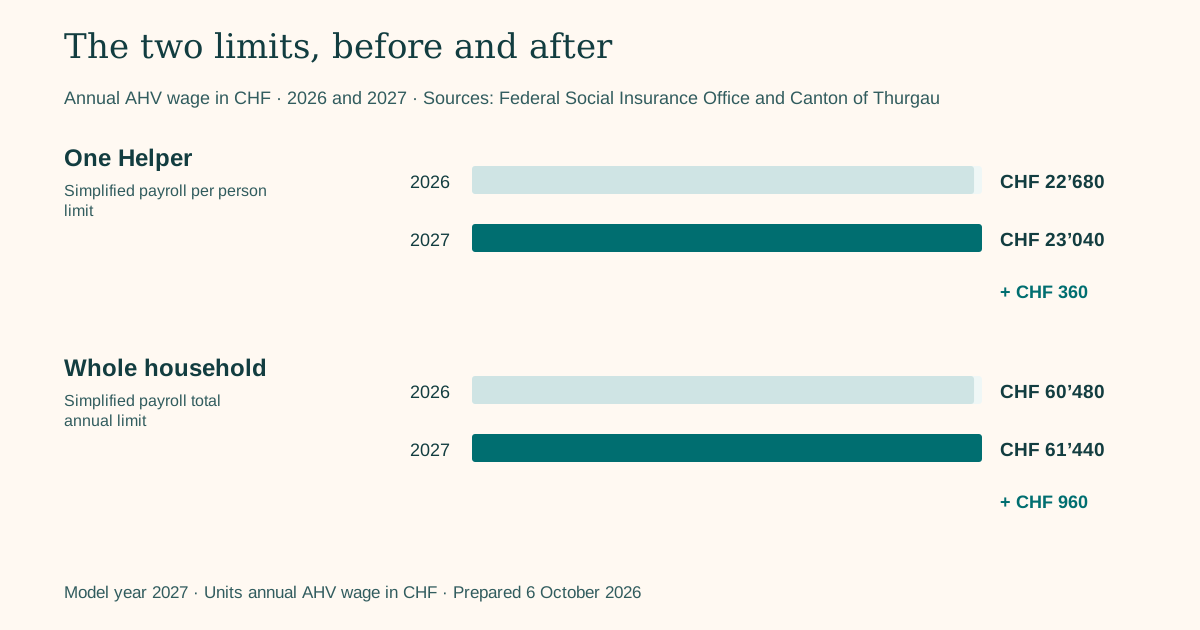
+ CHF 360
+ CHF 960
| Limit | 2026 | 2027 | Increase |
|---|---|---|---|
| One Helper | CHF 22’680 | CHF 23’040 | + CHF 360 |
| Whole household | CHF 60’480 | CHF 61’440 | + CHF 960 |
What CHF 360 means in weekly planning
At the 2026 federal domestic work base rate of CHF 20.35 an hour, the CHF 360 increase equals about 17.7 hours of pay across the year. For a regular schedule worked over 48 weeks, with the same wage continuing through 4 holiday weeks, that is about 20 minutes more in each worked week.
At an illustrative base rate of CHF 30.00, the same increase equals 12.0 hours of pay, or about 13.8 minutes more in each worked week. This is an illustration, not a wage floor.
Additional public holiday payments, a thirteenth salary, board and lodging and other pay items counted toward AHV can leave fewer hours before the limit.
20.4minutes more in each worked week
CHF 360 ÷ CHF 20.35 ÷ 52 × 60Higher hourly pay uses the room faster
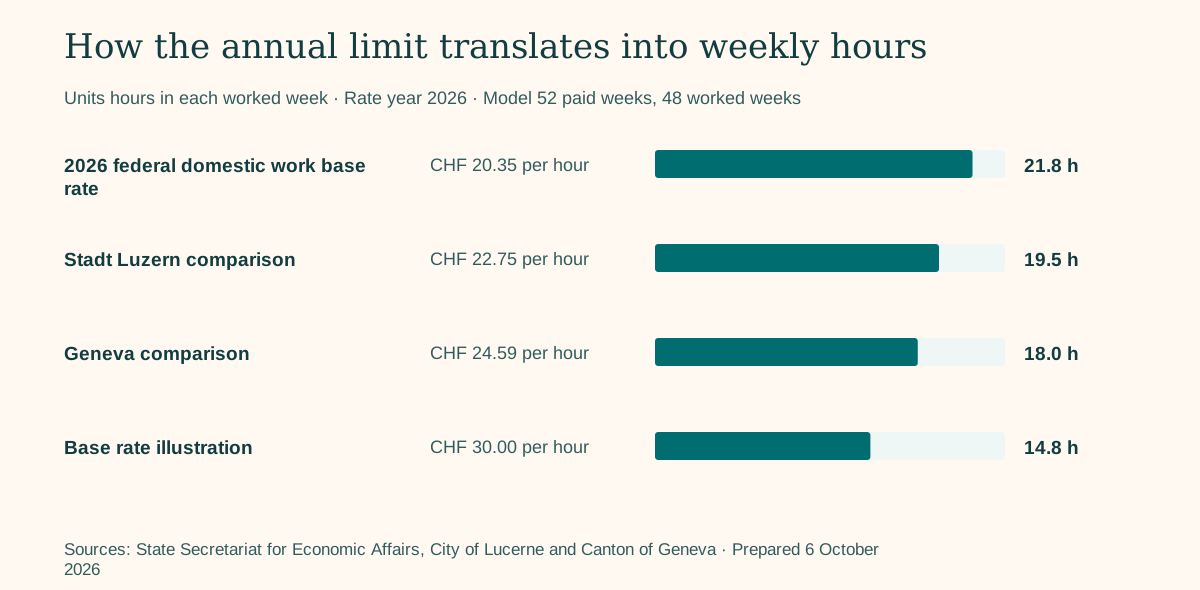
The limit is the same, whatever hourly wage the household and Helper agree. A higher rate therefore leaves fewer hours before the limit is reached. To isolate the threshold change, the regional rows keep hourly pay at published 2026 rates. They are not forecasts of the rates for 2027. Every row uses the same paid week and holiday basis.
How the annual limit translates into weekly hours
How the annual limit translates into weekly hours SVGHow the annual limit translates into weekly hours PNG
| Scenario | Hourly pay used | Scheduled hours in each worked week | Rate status |
|---|---|---|---|
| 2026 federal domestic work base rate | CHF 20.35 | 21.8 h | Published 2026 federal rate, subject to the federal rule's scope |
| Stadt Luzern comparison | CHF 22.75 | 19.5 h | Published 2026 municipal rate, subject to the city rule's scope |
| Geneva comparison | CHF 24.59 | 18.0 h | Published 2026 cantonal rate |
| Base rate illustration | CHF 30.00 | 14.8 h | Illustration only, not a wage floor |
All rows use the same regular schedule and paid holiday model described above.
Short contracts need two separate checks
Simplified procedure
For the simplified procedure, an employment lasting less than a year is tested on the Helper's actual earnings during that employment. Those earnings are not converted into a full year amount for this ceiling.
Occupational pension cover
Occupational pension cover is a separate question. For that test, pay from a short contract is converted to a full year amount. A constant monthly wage above CHF 1’920 crosses the wage threshold. The normal age rules still apply, and a fixed contract of no more than 3 months is generally excluded, with separate rules for extensions and successive contracts.
The new thresholds give households a little more room, but they do not replace a proper employment arrangement. Our aim at Helpore is to make the paperwork simpler while protecting the Helper’s pay and pension rights.
What households should check before 2027
For a household already near the limit, the CHF 360 increase is small. Check expected annual pay before the new year, include the pay items counted toward AHV, and do not treat the limit as a cap on what a Helper may earn.
If your household already employs a Helper, Helpore Admin Light prepares the monthly calculation sheet and documents, while your household registers as the employer, submits the documents and pays the Helper, contributions and premiums directly. With Helpore Admin, Helpore runs registration, payroll, contributions and insurance administration under your signed authorisation. Your household remains the employer, and Helpers pay no Helpore fee.
Questions household employers ask
Is CHF 23’040 the maximum a household may pay one Helper?
No. It is a limit for using the simplified payroll procedure and the pension fund entry threshold, not a maximum wage. Ordinary payroll can be chosen at any wage and is required if a simplified payroll limit is exceeded.
Can the simplified procedure be used at exactly CHF 23’040?
Yes, if the household also stays at or below the total ceiling of CHF 61’440 and meets the other conditions. Above either ceiling, the simplified procedure is not available.
Does a short contract use the same calculation for payroll and the pension fund?
No. The simplified procedure tests actual earnings during the short employment. The pension fund test uses what that pay would be over a full year. A constant monthly wage above CHF 1’920 crosses the wage threshold, subject to the normal age and contract duration exceptions.
How are the weekly hour figures calculated?
They show hours in each week actually worked, not an average spread across every calendar week. The calculation uses the regular schedule and paid holiday model explained above.
Did this decision change household work minimum wages?
No. It changed pension linked amounts and the ceilings tied to them. National, cantonal and municipal wage floors are set separately.
Method and limits
The one Helper limit follows the occupational pension entry threshold. Under the statutory formula, the household limit is twice the maximum monthly AHV pension multiplied by 12. That is CHF 960 more than the previous limit. The additional AHV payment is a supplement and is not added to that reference amount. The current simplified procedure leaflet still shows the 2026 figures. The short contract monthly reference is the one Helper limit divided by 12.
The limits and hourly inputs are gross AHV wages before deductions. Weekly hours equal the annual limit divided by the base hourly rate and 52 paid weeks. These include 4 holiday weeks, leaving 48 weeks actually worked. Results use unrounded rates and are rounded only for display.
The federal base rate is for unskilled domestic workers with less than 4 years of experience and no qualifications, within the federal rule's scope. That rule normally requires an average of at least 5 hours a week with the same household and does not apply in Geneva. The Stadt Luzern rate is municipal and applies to a usual workplace in the city, excluding work there for an employer based outside it. Both local rows hold published 2026 rates constant. They are not forecasts for 2027. Additional public holiday payments, a thirteenth salary, board and lodging and other pay items counted toward AHV can reduce the hours available.
Official sources
- Federal Council and Federal Social Insurance Office decision of 2 October 2026
- Federal Social Insurance Office amounts valid from 1 January 2027
- AHV and IV information sheet on the simplified procedure
- State Secretariat for Economic Affairs guidance on the simplified procedure
- Canton of Thurgau tax practice on the linked ceilings
- State Secretariat for Economic Affairs information on the national standard employment contract for domestic work
- City of Lucerne minimum wage information
- Published Geneva minimum wage reference for 2026
- Federal Gazette legal text on the additional AHV payment