Swiss home care · Eurostat 2016 and 2024
Paid help at home in Switzerland: one in twelve people in households needing care name cost as the main barrier (2024)
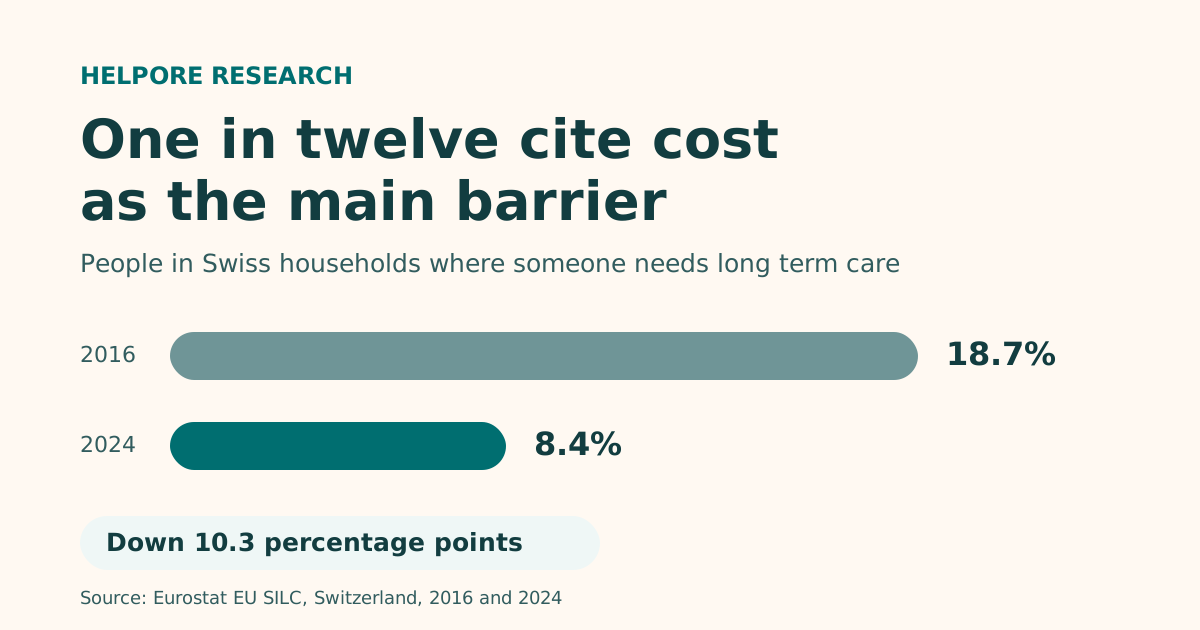
In 2024, 8.4% of everyone living in a Swiss household where someone needed long term care named cost as the main reason for receiving no paid help at home, or not enough. In 2016 it was 18.7%: the share is now less than half.
The measure covers paid care and everyday help needed because of long term illness, infirmity or old age.
The national change
18.7% to 8.4%: 10.3 percentage points lower, a fall of 55%.
The finding
Cost still stands in the way for 8.4%
In 2024, 9.8% of people at risk of poverty or social exclusion named cost, against 7.7% of everyone else.
Explore the evidence
Compare 2016 and 2024
Financial reasons as the main barrier
Share of people in the measured Swiss population.
18.7% to 8.4%: 10.3 percentage points lower, a fall of 55%.
| Year | Share | Plain language |
|---|---|---|
| 2016 | 18.7% | Nearly one in five |
| 2024 | 8.4% | About one in twelve |
The remaining difference in 2024
Financial reasons named in 2024, by poverty or social exclusion status.
A 2.1 percentage point difference in 2024, not tested for statistical significance.
| Group | Share |
|---|---|
| At risk of poverty or social exclusion | 9.8% |
| Everyone else | 7.7% |
The charts are supplementary. The complete values are available in the tables and downloadable data.
Source: Eurostat EU Statistics on Income and Living Conditions, Swiss observations for 2016 and 2024. Values are percentages.
Eurostat definition
What Eurostat counts as paid home care
The categories below describe the statistical measure. Paid help at home is broader than nursing.
- Meals
- Medication reminders
- Laundry
- Light housekeeping
- Shopping
- Transport
- Companionship
- Health support
Cost and the risk of poverty or social exclusion
A gap of 2.1 points, not tested
The 2.1 point gap between people at risk of poverty or social exclusion and everyone else has not been tested for statistical significance, because Eurostat publishes no confidence intervals with these figures. In 2016 the gap was 9.5 points, 24.7% against 15.2%, with the same caveat. The largest answer is "no unmet needs and professional care used": 48.0% in 2024, up from 37.2% in 2016. Another 34.3% gave "other reason" in 2024.
Why it matters
Paid help can keep everyday life possible at home
The help Eurostat counts includes meals, laundry, light housekeeping, shopping, transport and company: everyday tasks a household can employ a Helper for.
“Fewer people name cost than in 2016, but 8.4% still means about one person in twelve in these households goes without paid help at home, or gets too little, mainly because of the price.”
Gilberto de la Fuente, Director at Helpore
Helpore’s view
Helpore simplifies household employment. The household remains the employer. Helpers never pay Helpore fees.
Method and source
A direct comparison of published Swiss data
Helpore compared Eurostat's published Swiss results for 2016 and 2024. The Swiss metadata calls the survey years 2014 to 2024 a comparable series, but online interviews started in 2023 and the Federal Statistical Office names series breaks for certain unmet needs, so 2016 and 2024 are only partly comparable. The figures report the main reason given; they do not measure prices, explain why the share changed or test differences for statistical significance.